During the 2016 ESPYs, Dwyane Wade, LeBron James, Carmelo Anthony, and Chris Paul, together known as the “Banana Boat Crew,” spoke out on the rise of social justice and racial profiling. As prominent figures in the NBA and influential models for those that admire them, they took the stage as an opportunity to influence change and work towards solidarity. They addressed the issues together as not only athletes, but members of the community as well.
Throughout their respective careers, James, Paul, Anthony, and Wade have been superstars that in the NBA have developed a large fan base, not just in the United States, but worldwide. Their celebrity status has allowed them the opportunity to be vocal regarding issues that exist in our society. They have taken advantage of this opportunity during their careers, and view it as a responsibility as a social figure. Anthony addressed his duty as a citizen in a Guardian editorial he wrote in 2016.
“[Speaking out] is not really about politics,” Anthony said. “There’s nothing political about taking a stand and speaking on what you believe in. When I chose to speak out, it was a matter of being honest, speaking from the heart about what’s going on and calling on my colleagues to step up, get out there and put pressure on the people in charge to not let this happen anymore.”
The ESPYs is an annual award show for individual and team athletic achievement and other sports-related performances. The ceremony is broadcasted on ABC and ESPN, where millions of viewers tune in to see their favorite athletes get recognized. With the increased publicity of racial profiling and retaliation within society, prominent athletes took the stage to raise awareness for these issues. They commenced the award show with brief, powerful speeches on the importance of solidarity and change.
“We stand here accepting our role in uniting communities to be the change we need to see,” Paul said during his speech at the ESPYs. “We stand before you as fathers, sons, husbands, brothers, [and] uncles.”
Wade addressed the rise of police brutality in recent years, particularly against African-Americans as a source of the tension in society. He condemned the offenders, and also called on athletes like himself to help modify the culture in America, no matter how difficult it may be.
“Not seeing the value of black and brown bodies has to stop,” Wade said to the audience. “Now, as athletes, it’s on us to challenge each other to do even more than we already do in our own communities. And the conversation, it cannot stop as our schedules get busy again. It won’t always be convenient. It won’t. It won’t always be comfortable, but it is necessary.”
Together, the four stars spoke out on the issues plaguing society as communal members and harbingers of change. Like everyone else, they were tired of the societal inequalities and injustice that has reigned supreme against African-Americans and minorities for hundreds of years. The problems were not new; however, the methods of change and raising awareness in efforts of reaching solidarity as a community has become a mission for these NBA stars.
“The system is broken,” Anthony urged in his ESPYs speech. “The problems are not new. The violence is not new, and the racial divide is definitely not new. But, the urgency for great change is at an all-time high.”
James, arguably the best player of his era, echoed the thoughts of hopelessness that many Americans feel today. He finished their collective speech by calling for everyone to look at their actions and see where they could improve to benefit society.
“We all feel helpless and frustrated by the violence,” James said. “It’s time to look in the mirror and ask ourselves what are we doing to create change. ...We all have to do better. Thank you.”
Authored by Armani Damiron and Michael Stern
Showing posts with label social media. Show all posts
Showing posts with label social media. Show all posts
Thursday, March 30, 2017

Friday, February 1, 2013
The two faces of social media
Social media is a convenient way to talk to others and stay connected even if you are miles away from them. It is great tool and people all over the world use it everyday, but athletes have to be on their guard whenever they post something. Social media can turn the player's life upside down in a second, but if the they learns how to use it effectively it will be one of their greatest weapons.
With amazingly fast internet speeds and fans that follow the player 24/7, any information the player releases will spread over the internet within a few minutes. A single misinterpreted post can lead to a world of trouble for athletes and it will usually end up in losing popularity.
Keeping feelings inside is actually not as easy as it looks especially when you are furious at someone else. A player may lose a game and just flip out on the other team and post insulting comments. Even if they just yell something insulting. someone in the stands might be recording the game and even post what they heard. Players have to be careful of what they say and post both on and off the field.
In high schools and colleges, the school and the coach will try to limit the use of social media. They aren't trying to stop the use of social media, but they will so what they can to stop it from becoming a problem. "We don't want to dictate to them what they can do on a daily basis," Coach Steve Pederson from Pittsburgh University said. "These are smart, young people we are dealing with. We just try to educate them on making good decisions, how to make good judgments."
In certain cases athletes are to download an app that allows the school/coach to see what they have been posting online. If something inappropriate is found on the athlete’s page he/she is usually asked to immediately take it down. Sometimes the coach will even take away the athlete’s privilege to use social media and ban him/her from using it at all.
Social media plays a huge role in an athlete’s life as it can both hurt and help him/her. Depending on how well the athlete can manage social media he/she can become more popular without any trouble. Kevin Long, the CEO of MVP Sports Media Training and U Diligence said "If it's not something that would be OK with your mother if someone sent her a link to what you wrote, then there is probably a better way of saying or not saying it at all.” Social media can be a helpful tool or it can be a life changing problem depending on how you look at it, but as long as athletes are smart and careful they won’t have any trouble using social media.
Thursday, January 19, 2012
Social media beneficial?
 In a time where social media is a necessity for players to get in touch with the public, athletes rely on social media sites such as Twitter and Facebook to get in touch with family, friends, and fans. The social media is viewed in many different ways and can be either used for benefit or destruction of a player.
Most athletes rely on social media sites for their boost their careers with sponsorships, teams, and fans. For example Orlando Magic’s All-Star center Dwight Howard has 2 million Facebook likes and more than 2.5 million followers on Twitter even though he does not have an NBA championship ring.
Kansas City Chiefs running back Larry Johnson was fined $213,000 for making homophobic remarks on Twitter.
The practice of using social media to bring fame and popularity has spread all over the world and is used now more than ever. The problem is that athletes do not know how to leverage the social media. For some players this is a very hard task because it has developed into a habit. Social media sites are easy to use and fast which tempts athletes to use them. If players don’t find some self-control with social media we may see many more fines.
Tuesday, January 3, 2012
MLB unfollows Twitter with new policy

Major League Baseball has been primitive in the use of modern technology. Ever since the evolution of videos on the Internet, MLB has banned all full game videos online. For example, nobody can post a MLB playoff game on YouTube. Another new policy has come out, taking a strike at social media use.
“All players will be subject to a policy governing the use of Social Media,” said an anonymous MLB reporter.
Many people agree that social media will lead players to say the wrong thing. After a controversial homerun or ejection, players might look to Facebook and Twitter as their personal diaries.
One notorious tweeter is the former Chicago White Sox manager Ozzie Guillen. Guillen was ejected for arguing with umpire, Todd Tichenor, at home plate. Shortly after the ejection, Guillen tweeted, "This one is going to cost me a lot of money this is pathetic." He then sent, "Today a tough guy show up at Yankee Stadium." He was apparently referring to Tichenor.
This is a prime example of players and managers getting crazy and typing before they think. Another eccentric baseball player is Brian Wilson. Wilson went to Twitter to talk about his weekend by talking about his encounter with overaggressive men in Scottsdale at 1am. After this tweet, MLB officials kept close watch of Brian Wilson’s Twitter account.
With the MLB monitoring off the wall players and managers, fans shouldn’t be angry yet. There might be stricter policies because players are getting more reckless in their use of social media.
Friday, December 23, 2011
Social media regulations in sports
Social media is the new medium of this age. Actors, politicians, and even the random guy down street are all trying to maximize social media in order to better their brand and public-image. However, not everyone is able to truly maximize the potential social media offers. A prime example of this is in the realm of professional sports. Almost all of the different sports have their own social media policy that can either be very restricting, such as Major League Baseball and the Olympic games, or a wide open field, such as that of World Wrestling Entertainment's.
The WWE shows how successful an unfettered social media policy can be. The WWE has amassed over seven-hundred thousand followers on Twitter and over seven million fans on Facebook and encourages all the fighters to have their own social media presence. In fact, the WWE promotes the players’ social media presence whenever they are at a fight. They don’t place any restrictions on their players and it pays off. The fans are able to interact with the fighters like never before and this gives them a feeling of connection; WWE memes have trended multiple times on twitter. It pays off for the WWE as well, as they get an opportunity to drive traffic to their site and promote less popular content. They have struck social media gold with their policy of unregulation.
Not everyone has been so accepting. The Olympics have been anything but accepting of social media by putting in place harsh restrictions such as: not allowing the contestants to comment on anything other then the events that they took part in, or not being able to interview other players, and perhaps the most ridiculous thing is that they can’t post any pictures of the games themselves. The list goes on and on with more rules that completely kill the hope for athletes to develop a social connection with their fans, and ultimately all this hurts the Olympics as well. The Olympics is having to struggle with making the games more relevant, and it is quickly becoming the token of dying media.
Other leagues are also falling behind. MLB has recently implemented a new social media policy that is failing them. MLB has 1.6 millon Twitter followers about half of both the NBA and NFL. The MLB is also falling behind in new media forms of publication, specifically their presence on YouTube. Frequently MLB takes down fan-made videos with MLB content, not allowing the fans to interact and express their passions for the game. All this, while having a practically non-existent presence on the site, occasionally uploading videos not catching more than a thousand views. Compare this to the NBA who happily post game excerpts driving people to get interested in the game and watch it on tv, greatly increasing the revenue flow.
There is no doubt that social media can be very influential in sports, but the people in charge are still slow to embrace it. The WWE should be a model for other sports to look to for their social media policies. The WWE shows how being open can win you everything.
 |
| Dolph Ziggler sporting a social media costume with the #heel hashtag |
Not everyone has been so accepting. The Olympics have been anything but accepting of social media by putting in place harsh restrictions such as: not allowing the contestants to comment on anything other then the events that they took part in, or not being able to interview other players, and perhaps the most ridiculous thing is that they can’t post any pictures of the games themselves. The list goes on and on with more rules that completely kill the hope for athletes to develop a social connection with their fans, and ultimately all this hurts the Olympics as well. The Olympics is having to struggle with making the games more relevant, and it is quickly becoming the token of dying media.
Other leagues are also falling behind. MLB has recently implemented a new social media policy that is failing them. MLB has 1.6 millon Twitter followers about half of both the NBA and NFL. The MLB is also falling behind in new media forms of publication, specifically their presence on YouTube. Frequently MLB takes down fan-made videos with MLB content, not allowing the fans to interact and express their passions for the game. All this, while having a practically non-existent presence on the site, occasionally uploading videos not catching more than a thousand views. Compare this to the NBA who happily post game excerpts driving people to get interested in the game and watch it on tv, greatly increasing the revenue flow.
There is no doubt that social media can be very influential in sports, but the people in charge are still slow to embrace it. The WWE should be a model for other sports to look to for their social media policies. The WWE shows how being open can win you everything.
A few characters can mean a lot for professional athletes
 |
| Nick Swisher |
Chad Ochocinco, a wide receiver who at the time played for the Cincinnati Bengals, has made a number of bad decisions over the years while playing in the NFL. During a simple harmless preseason game in 2010, he made another. While sitting out of the game, Ochocinco sent a tweet. The NFL does not allow a player to use social media during the game. Ochocinco was fined $25,000 for his act.
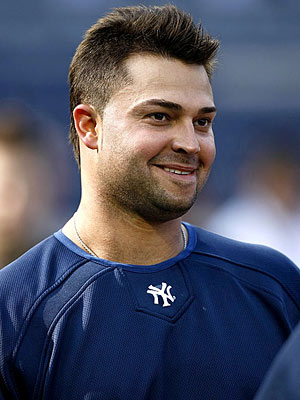
Athletes also have become very popular on Facebook or Twitter. Nick Swisher, a right fielder for the New York Yankees, currently has about 1,430,000 followers. He has interacted well with fans and knows what to say and what not to say. Swisher tweets all the time. He also is a huge supporter of stopping cancer which makes his popularity extremely high.
Social media is something that has hurt some players, while others have had great success with it. If it is possibly going to cost the athlete $125,000, maybe it just isn’t right for some players. Communicating with others who do not share that personality can be damaging to both the player and the fan.
The age of social media and sports
 |
| Zack Ryder / thatguygil - Flickr |
The WWE rewards wrestlers who build up a fan base on social media. One instance of this is Zack Ryder’s recent climb in the business. Ryder began making Youtube videos that many fans enjoyed. His Youtube fame got to the point where fans would hold up signs for him in live events that he wasn’t a part of. This persuaded the WWE to put him in more matches and when it came to their annual Slammy Awards event a few months later, Ryder won the Trending Star of the Year.
Professional athletes are often on the road which causes some athletes to feel lonely. “It’s good to stay in touch with friends, family, and fans,” said Aaron Brown, a sophomore shooting guard at Temple University, to SLAM. Social media is an easy way for athletes to stay connected to these various people.
Social media already has the capability of spreading news faster than newspapers. In fact, Twitter can now boast how it alerts athletes faster than their agents on topics as big as a trade. Craig Breslow, now a pitcher for the Arizona Diamondbacks, tweeted, “I can no longer denounce the relevance of Twitter. It broke the story of my trade ... to me.”
Social media is an athletes stage for a different type of preformance and it effects them in many ways. Many athletes are targeted as prey through social media, but as Howard Ferguson (1990) wrote in his book The Edge, “Mediocre people play it safe and avoid criticism at all costs. Champions risk criticism every time they perform.”
NBA makes money off twitter
 |
| Mark Cuba / Keith Allison - Flickr |
The rule for NBA players regarding the use of Twitter extends to 45 minutes before and after the game. First the players have to satisfy their obligations to the media, and then they can tweet away. This rule cost Brandon Jennings of the Milwaukee Bucks $7,500. He was announcing a big win right after the game. Unfortunately it was not 45 minutes after the game which meant he had broken a NBA rule.
Owner Mark Cuban of the Dallas Mavericks has found a new thing he is good at, paying fines to the NBA! Cuban has paid more then one million dollars for his many critiques. One of his very first tweets were complaints about NBA officiating twitter in to their rule book. That tweet unfortunately cost him $25,000.
He was not the only fined. During the 2011 NBA lockout Micky Arison, owner of the Miami Heat was given an enormous fine of $500,000. He apparently had posted how frustrating the lockout was. He had also replied to a comment by a fan,”How’s it feel to be a part [sic] of ruining the best game in the world? NBA owners/players don’t give a damn about fans&and guess what? Fans provide all the money you’re fighting over&you greedy [expletive] pigs.” And his reply was,” Barking at the wrong owner.” The NBA had told owners and coaches that they were not to discuss anything about the lockout on Twitter or any other social networks.
Other owners like Ted Leonsis, owner of the Wizards and Michael Jordan, owner of the Bobcats were also fined. Leonsis received a $100,000 fine last year for comments about possible changes to the league’s salary cap and Jordan also was fined $100,000 fine for comments he made in August about the lockout.
Players, owners, and coaches should watch what they post on Twitter or other social websites that can be viewed by NBA officials unless; paying fines is a new hobby.
Friday, December 16, 2011
Athletes tweet away
 |
| Credit to Morpurgo |
There are plenty of examples of athletes getting into trouble on social media sites, such as Twitter and Facebook. Most of the time, an artificial, insincere apology follows. Then, the story fades away into the bellows of the past within the next couple of days. As more athletes get into trouble over what they say, more coaches and agents are banning their players from Twitter or filtering what they post.
Athletes have said stupid things on Twitter since it first became popular, and they will continue to say such things on Twitter until it fades away (if it ever does). A lot of the time, they do not realize that seconds after they post something on Twitter, thousands of fans can see it and it could be damaging to their reputation or image.
Stupid or insulting things posted on Twitter rarely damage a professional athlete’s image permanently. When an athlete posts something offensive on a social media site, all they have to do is say “Sorry” with an explanation afterward which mostly consist of something like “I wasn’t thinking” or “I realize now that what I said could have been offensive”. After that happens, most of the time the story is over and everyone is forgiven.
With all the players who have gotten fined for what they tweet, there has only been one well-known instance of someone losing their job. That person is Larry Johnson, former Pro-Bowl running back for the Kansas City Chiefs. After lashing out at one of his coaches and insulting one of his fans with a gay slur, he was released from the team after 32,000 fans signed a petition asking the Chiefs to fire him. No amount of apologies could have gotten him out of that situation.
Social media rarely has a permanent, negative effect on an athlete’s image. If anything, it draws more publicity to them and makes them have even more followers because everyone wants to see their post.
NHL’s new social media policy for players
The National Hockey League enforced a new policy approved by the National Hockey League Players’ Association, restricting the use of social media applications by its players. Taking effect for the 2011-2012 season, the policy includes a social media blackout period that starts two hours before the game, lasting until are post-game interviews are over.
The policy was created in order to make sure certain information isn’t leaked out to the public, as well as false information that could go against the NHL’s league rules. It was also made to prevent people from betting on the game using information that is not approved. Players are asked to be cautious of what they post online. Failure to follow the policy would result as a fine to the player. “The policy is sensible. It lets our players and clubs participate substantially in the opportunity of social networking while identifying and mitigating some of the risks. To date, our players and clubs have been exemplary in connecting with fans on social networks, and fans should not expect to see any material difference as a result of this policy," said Deputy Commissioner Bill Daly on a CbsSports.com article.
The National Football League and the National Basketball Association have been using this policy for about two years. Major League Baseball has been using a social media policy for a shorter time. The NHL was one of the last leagues to implement a social media policy because they felt that their players don’t engage into social media, as much as the players from the other league.
One of the most active tweeters in the NHL, Paul Bissonnette, a left winger for the Phoenix Coyotes, does not seem to have a problem with it. “People asking about NHL’s new policy on Twitter. I think it’s good. I don’t even play much and I don’t tweet on game days. Plenty of off days,” he said to TheStar.com. New York Islander Michal Grabner also tweeted, “Heard there will be a social media policy in the NHL ... good thing most our my tweets are about food, napping or video games #dontwanttobefined.”
Though a policy has been administered, there should not be any changes in the way players communicate with the use of social media. Players are restricted from revealing certain information; however the public will continue hearing from them.
Social media, a change for the better?
Many people use social media such as Twitter and Facebook, for these are ways to send and receive information faster than newspapers. However, when sports start to ban social media, many questions arise wondering if social media is good or bad for the sport.
However; soccer is not the only sport being affected. The National Football League and The US Open also ban the use of any social media during a game. Andy Roddick, who plays in the US open said, “I think its lame the US Open is trying to regulate our tweeting. … I understand the on-court issue but not sure they can tell us if we can.”
This seems that social media is a bad influence on sports, but there are others that argue social media has positive influence. Many sports fans using Twitter or Facebook check on their favorite players and see how they played in recent games. They could also have a chance of talking to favorite player. Sports teams also can use social media as a chance to generate revenue. The Jets used social media and gained many fans by giving away prizes such as tickets to games.
Sport fans say sports teams should just adopt the way social media is going to affect them, because of its positive results affecting both sports and sport fans alike. Adam Ostrow, chief editor of Mashable said, “Social media should be viewed as a fantastic compliment to sports that is good for both fans and the TV networks, but at the moment, it seems that’s anything but how it’s being perceived.”
 |
| Some major social media used by many |
Manchester United is a soccer team that banned the use of social media. Many of its members’ Facebook and Twitter accounts were closed right after the policy came down. Manchester United said that banning social media keeps the teams reputation safe and protects inside information without it being revealed to the public. Shortly after Manchester United’s ban, their rival Manchester City also banned the use of social media.
However; soccer is not the only sport being affected. The National Football League and The US Open also ban the use of any social media during a game. Andy Roddick, who plays in the US open said, “I think its lame the US Open is trying to regulate our tweeting. … I understand the on-court issue but not sure they can tell us if we can.”
This seems that social media is a bad influence on sports, but there are others that argue social media has positive influence. Many sports fans using Twitter or Facebook check on their favorite players and see how they played in recent games. They could also have a chance of talking to favorite player. Sports teams also can use social media as a chance to generate revenue. The Jets used social media and gained many fans by giving away prizes such as tickets to games.
Sport fans say sports teams should just adopt the way social media is going to affect them, because of its positive results affecting both sports and sport fans alike. Adam Ostrow, chief editor of Mashable said, “Social media should be viewed as a fantastic compliment to sports that is good for both fans and the TV networks, but at the moment, it seems that’s anything but how it’s being perceived.”
Social media and it's affect on the sports industry
In a generation influenced by social media, websites such as Facebook and Twitter are strong tools in advertising. The cause of this is that news can be posted through mobile devices quickly and easily. With this option, athletes are able to present opinions and promote public events to their fans. These interactions through social media networks offer fans a voice in the sports industry and can share their thoughts to the athletes using Twitter.
Social media's reliable ways to spread information and give fans an option to communicate with athletes has positive effects on the sports industry. Depending on a player’s involvement with Twitter and Facebook their popularity will increase. With a large fan base, players see higher sales in their merchandise such as jerseys and other apparel.
Even though the athletes have better ways of spreading their thoughts through the internet, there can be negative effects of doing this. With the world spending time on social media, athletes have to be aware of how they are addressing their opinions. If their post is offending to anyone, it will spread and negatively impact the player’s reputation.
Players even have to watch what they say about their opponents. There have been numerous situations where the players have said insults toward the opposing team and caused conflict. For example, in the past week there was a college basketball fight that started over Twitter. At first it was just the players talking trash, but it escalated from there and all the anger poured out during the game.
Social media will always have ups and downs. If athletes appropriately express their opinions to the public they can avoid conflicts, but if they feel free to express their thoughts they may run into trouble and face consequences. However, players and coaches are able to share advice with their fans and even advertise their team’s merchandise.
Subscribe to:
Posts (Atom)
