Showing posts with label Facebook. Show all posts

Thursday, January 19, 2012

Social media beneficial?

In a time where social media is a necessity for players to get in touch with the public, athletes rely on social media sites such as Twitter and Facebook to get in touch with family, friends, and fans. The social media is viewed in many different ways and can be either used for benefit or destruction of a player.

Most athletes rely on social media sites for their boost their careers with sponsorships, teams, and fans. For example Orlando Magic’s All-Star center Dwight Howard has 2 million Facebook likes and more than 2.5 million followers on Twitter even though he does not have an NBA championship ring.

Kansas City Chiefs running back Larry Johnson was fined $213,000 for making homophobic remarks on Twitter.

The practice of using social media to bring fame and popularity has spread all over the world and is used now more than ever. The problem is that athletes do not know how to leverage the social media. For some players this is a very hard task because it has developed into a habit. Social media sites are easy to use and fast which tempts athletes to use them. If players don’t find some self-control with social media we may see many more fines.

Friday, December 23, 2011

A few characters can mean a lot for professional athletes

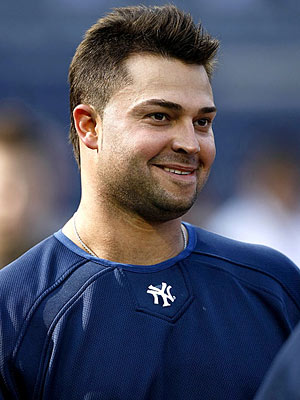
Nick Swisher
Social media has been a topic of debate over the past few years for professional athletes. What puzzles many is the fact that things so small and unrelated to anything can stir up much controversy. Messages posted on Twitter or Facebook have worked very well for certain players, while other athletes have made poor decisions when posting a message. The fans really make the judgement of whether the message is appropriate, and even if it is simply a “joke” for the athletes, some fans don’t think of it like that.

Chad Ochocinco, a wide receiver who at the time played for the Cincinnati Bengals, has made a number of bad decisions over the years while playing in the NFL. During a simple harmless preseason game in 2010, he made another. While sitting out of the game, Ochocinco sent a tweet. The NFL does not allow a player to use social media during the game. Ochocinco was fined $25,000 for his act.

Athletes also have become very popular on Facebook or Twitter. Nick Swisher, a right fielder for the New York Yankees, currently has about 1,430,000 followers. He has interacted well with fans and knows what to say and what not to say. Swisher tweets all the time. He also is a huge supporter of stopping cancer which makes his popularity extremely high.

Social media is something that has hurt some players, while others have had great success with it. If it is possibly going to cost the athlete $125,000, maybe it just isn’t right for some players. Communicating with others who do not share that personality can be damaging to both the player and the fan.

NBA makes money off twitter

Mark Cuba / Keith Allison - Flickr
For years athletes have been using sites like Twitter and Facebook to get closer to their fans. However, there are more people reading it then they think. NBA officials have long been keeping an eye on players, owners, and coaches and their activities on social networks. If they don’t watch what they post they may find themselves in deep waters. Things like criticizing the team or tweeting during games are written into the NBA rulebook and the penalties are expensive fines.

The rule for NBA players regarding the use of Twitter extends to 45 minutes before and after the game. First the players have to satisfy their obligations to the media, and then they can tweet away. This rule cost Brandon Jennings of the Milwaukee Bucks $7,500. He was announcing a big win right after the game. Unfortunately it was not 45 minutes after the game which meant he had broken a NBA rule.

Owner Mark Cuban of the Dallas Mavericks has found a new thing he is good at, paying fines to the NBA! Cuban has paid more then one million dollars for his many critiques. One of his very first tweets were complaints about NBA officiating twitter in to their rule book. That tweet unfortunately cost him $25,000.

He was not the only fined. During the 2011 NBA lockout Micky Arison, owner of the Miami Heat was given an enormous fine of $500,000. He apparently had posted how frustrating the lockout was. He had also replied to a comment by a fan,”How’s it feel to be a part [sic] of ruining the best game in the world? NBA owners/players don’t give a damn about fans&and guess what? Fans provide all the money you’re fighting over&you greedy [expletive] pigs.” And his reply was,” Barking at the wrong owner.” The NBA had told owners and coaches that they were not to discuss anything about the lockout on Twitter or any other social networks.

Other owners like Ted Leonsis, owner of the Wizards and Michael Jordan, owner of the Bobcats were also fined. Leonsis received a $100,000 fine last year for comments about possible changes to the league’s salary cap and Jordan also was fined $100,000 fine for comments he made in August about the lockout.


Players, owners, and coaches should watch what they post on Twitter or other social websites that can be viewed by NBA officials unless; paying fines is a new hobby.

Friday, December 16, 2011

Has social media affected professional sports?


Social media has affected professional sports throughout the world because of its speed and availability. Athletes and even news reporters find out about new important information right away when somebody posts the data or tweets it. Social media also allows the strengthen bonds between fans and athletes. Social Media also had a negative impact on players. Social media is allowing athletes to exercise their “freedom of speech”. Not only that, but with athletes referring to some ill conceived idea about other team members and athletes, consequences are to be had.

There have been many incidents where team members find out what coaches want to do with the athlete before they do. On December 9th, the Oakland Athletics and the Arizona Diamondbacks completed a huge trade. In total, five players changed teams including left handed pitcher Craig Breslow, who was sent to the Diamondbacks. Breslow says that he was able to get his information about his trade through Twitter. Breslow tweeted, “I can no longer denounce the relevance of Twitter. It broke the story of my trade ... to me.” Although Breslow didn’t appreciate his trade being announced publicly before it was to him, he replied with thank-yous to all the people that wished him good luck on the Diamondbacks.

Social media such as Facebook and Twitter have ruined many careers for athletes. Athletes may tweet or post quotes or ideas that may sound correct to them but to the readers ear it may not. Also athletes may want to express something, but in reality it may be wrong. One athlete that fell into the hole of Twitter was Larry Johnson, who was a starting NFL running back for the Kansas City Chiefs. Nowadays, he is out of work after being released by the Redskins. He was released because of his poor play and his continued use of gay slurs on Twitter. Now look where that has brought him.

Social media is allowing us to receive information right away. Athletes do not realize information that is released into the Internet is never erasable. Many athletes have made that mistake in sports and have suffered greatly.

Social media and it's affect on the sports industry

In a generation influenced by social media, websites such as Facebook and Twitter are strong tools in advertising. The cause of this is that news can be posted through mobile devices quickly and easily. With this option, athletes are able to present opinions and promote public events to their fans. These interactions through social media networks offer fans a voice in the sports industry and can share their thoughts to the athletes using Twitter.

Social media's reliable ways to spread information and give fans an option to communicate with athletes has positive effects on the sports industry. Depending on a player’s involvement with Twitter and Facebook their popularity will increase. With a large fan base, players see higher sales in their merchandise such as jerseys and other apparel.

Even though the athletes have better ways of spreading their thoughts through the internet, there can be negative effects of doing this. With the world spending time on social media, athletes have to be aware of how they are addressing their opinions. If their post is offending to anyone, it will spread and negatively impact the player’s reputation.

Players even have to watch what they say about their opponents. There have been numerous situations where the players have said insults toward the opposing team and caused conflict. For example, in the past week there was a college basketball fight that started over Twitter. At first it was just the players talking trash, but it escalated from there and all the anger poured out during the game.

Social media will always have ups and downs. If athletes appropriately express their opinions to the public they can avoid conflicts, but if they feel free to express their thoughts they may run into trouble and face consequences. However, players and coaches are able to share advice with their fans and even advertise their team’s merchandise.
Related Posts Plugin for WordPress, Blogger...