Showing posts with label Twitter. Show all posts

Wednesday, June 4, 2014

Do fans take it too far?

Dani Alves eating a banana thrown by a fan | LaRed.com
Modern sports fans are getting involved with players beyond the usual boos and jeers, some going to the point of physical abuse. Fans feel as if it is their right to do what they want at major sporting event by virtue of purchasing a ticket, and athletes feel insecure about their safety as well as their families’ well-being.

Some of the most popular cases of player harassment have been reported worldwide. In 1994, Nancy Kerrigan, skating star and Olympic medalist, had just finished a practice routine when she was struck on the knee by an assailant, bruising it. A member of the audience threw a banana at FC Barcelona soccer player Dani Alves in 2014. It seems as if there is no way to protect athletes from such scenarios, as fans are still able to harm them.

“Athletes perform in huge ballparks and arenas,” Mark Hyman said in a 1994 BaltimoreSun.com article. “They travel through airports and are as recognizable as any Hollywood movie star. Is there any way to protect them from obsessed fans determined to reach and maybe hurt them?”

One might ask, why do fans boo athletes? Although not many answers have been given to this question, some possible theories are to teach their team a lesson for playing poorly, or to show the other team how much they are hated. One fan believes that booing and harassing players is their right, since they paid to see them, and will only support athletes when they perform well.

“Why do we do it?” Hunter Davies said in a 2013 NewStatesman.com article. “It’s our right, innit? We have paid our money, we can do what we like. We want them to do good things, then we’ll cheer. We love the club dearly, always hoping for better things, so feel personally let down when they play rubbish.”

Some fans have even gone so far as to invade athletes’ social media. From personal insults to death threats, fans see no boundaries to the hateful comments and tweets.

“SANCHEZ BETTER HAVE ARMED SECURITY WEDNESDAY AT PRACTICE!!” Twitter user @BraveGrancru said to New York Jets quarterback Mark Sanchez in 2012. “YOU THINK IMMA SIT HERE & WATCH THIS [expletive]?? TUHHH!”

With all the threats received from fans, players cannot help but worry about their families’ security. If an athlete’s primary concern during a game is the safety of his relatives in the stands, he/she will not be able to focus on the match.

“The last thing a player wants to be concerned with while playing in a game is the safety of his family inside the stadium,” Akbar Gbajabiamila said in a 2012 NFL.com article. “As players, we are all too aware of the security threat that fans of the opposing team pose to our families.”

Policymakers are stumped as to how they can reduce the threat posed by fans, and as to what means they can use to prevent situations of fan abuse in the future. Despite increased security implementations, fans have continued to find ways to get up close and personal to players.

Written by Muhammad Abid Hasan & Ismail Elomri

Thursday, January 19, 2012

Social media beneficial?

In a time where social media is a necessity for players to get in touch with the public, athletes rely on social media sites such as Twitter and Facebook to get in touch with family, friends, and fans. The social media is viewed in many different ways and can be either used for benefit or destruction of a player.

Most athletes rely on social media sites for their boost their careers with sponsorships, teams, and fans. For example Orlando Magic’s All-Star center Dwight Howard has 2 million Facebook likes and more than 2.5 million followers on Twitter even though he does not have an NBA championship ring.

Kansas City Chiefs running back Larry Johnson was fined $213,000 for making homophobic remarks on Twitter.

The practice of using social media to bring fame and popularity has spread all over the world and is used now more than ever. The problem is that athletes do not know how to leverage the social media. For some players this is a very hard task because it has developed into a habit. Social media sites are easy to use and fast which tempts athletes to use them. If players don’t find some self-control with social media we may see many more fines.

Tuesday, January 3, 2012

MLB unfollows Twitter with new policy


Major League Baseball has been primitive in the use of modern technology. Ever since the evolution of videos on the Internet, MLB has banned all full game videos online. For example, nobody can post a MLB playoff game on YouTube. Another new policy has come out, taking a strike at social media use.


“All players will be subject to a policy governing the use of Social Media,” said an anonymous MLB reporter.

Many people agree that social media will lead players to say the wrong thing. After a controversial homerun or ejection, players might look to Facebook and Twitter as their personal diaries.

One notorious tweeter is the former Chicago White Sox manager Ozzie Guillen. Guillen was ejected for arguing with umpire, Todd Tichenor, at home plate. Shortly after the ejection, Guillen tweeted, "This one is going to cost me a lot of money this is pathetic." He then sent, "Today a tough guy show up at Yankee Stadium." He was apparently referring to Tichenor.

This is a prime example of players and managers getting crazy and typing before they think. Another eccentric baseball player is Brian Wilson. Wilson went to Twitter to talk about his weekend by talking about his encounter with overaggressive men in Scottsdale at 1am. After this tweet, MLB officials kept close watch of Brian Wilson’s Twitter account.

With the MLB monitoring off the wall players and managers, fans shouldn’t be angry yet. There might be stricter policies because players are getting more reckless in their use of social media.

Friday, December 23, 2011

A few characters can mean a lot for professional athletes

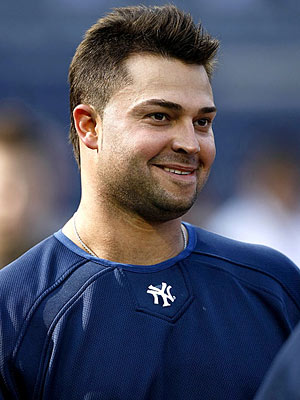
Nick Swisher
Social media has been a topic of debate over the past few years for professional athletes. What puzzles many is the fact that things so small and unrelated to anything can stir up much controversy. Messages posted on Twitter or Facebook have worked very well for certain players, while other athletes have made poor decisions when posting a message. The fans really make the judgement of whether the message is appropriate, and even if it is simply a “joke” for the athletes, some fans don’t think of it like that.

Chad Ochocinco, a wide receiver who at the time played for the Cincinnati Bengals, has made a number of bad decisions over the years while playing in the NFL. During a simple harmless preseason game in 2010, he made another. While sitting out of the game, Ochocinco sent a tweet. The NFL does not allow a player to use social media during the game. Ochocinco was fined $25,000 for his act.

Athletes also have become very popular on Facebook or Twitter. Nick Swisher, a right fielder for the New York Yankees, currently has about 1,430,000 followers. He has interacted well with fans and knows what to say and what not to say. Swisher tweets all the time. He also is a huge supporter of stopping cancer which makes his popularity extremely high.

Social media is something that has hurt some players, while others have had great success with it. If it is possibly going to cost the athlete $125,000, maybe it just isn’t right for some players. Communicating with others who do not share that personality can be damaging to both the player and the fan.

The age of social media and sports

Zack Ryder / thatguygil - Flickr
Social media helps athletes in a number of ways. Many athletes use it to attract attention, get news, and stay connected with people.

The WWE rewards wrestlers who build up a fan base on social media. One instance of this is Zack Ryder’s recent climb in the business. Ryder began making Youtube videos that many fans enjoyed. His Youtube fame got to the point where fans would hold up signs for him in live events that he wasn’t a part of. This persuaded the WWE to put him in more matches and when it came to their annual Slammy Awards event a few months later, Ryder won the Trending Star of the Year.

Professional athletes are often on the road which causes some athletes to feel lonely. “It’s good to stay in touch with friends, family, and fans,” said Aaron Brown, a sophomore shooting guard at Temple University, to SLAM. Social media is an easy way for athletes to stay connected to these various people.

Social media already has the capability of spreading news faster than newspapers. In fact, Twitter can now boast how it alerts athletes faster than their agents on topics as big as a trade. Craig Breslow, now a pitcher for the Arizona Diamondbacks, tweeted, “I can no longer denounce the relevance of Twitter. It broke the story of my trade ... to me.”

Social media is an athletes stage for a different type of preformance and it effects them in many ways. Many athletes are targeted as prey through social media, but as Howard Ferguson (1990) wrote in his book The Edge, “Mediocre people play it safe and avoid criticism at all costs. Champions risk criticism every time they perform.”

NBA makes money off twitter

Mark Cuba / Keith Allison - Flickr
For years athletes have been using sites like Twitter and Facebook to get closer to their fans. However, there are more people reading it then they think. NBA officials have long been keeping an eye on players, owners, and coaches and their activities on social networks. If they don’t watch what they post they may find themselves in deep waters. Things like criticizing the team or tweeting during games are written into the NBA rulebook and the penalties are expensive fines.

The rule for NBA players regarding the use of Twitter extends to 45 minutes before and after the game. First the players have to satisfy their obligations to the media, and then they can tweet away. This rule cost Brandon Jennings of the Milwaukee Bucks $7,500. He was announcing a big win right after the game. Unfortunately it was not 45 minutes after the game which meant he had broken a NBA rule.

Owner Mark Cuban of the Dallas Mavericks has found a new thing he is good at, paying fines to the NBA! Cuban has paid more then one million dollars for his many critiques. One of his very first tweets were complaints about NBA officiating twitter in to their rule book. That tweet unfortunately cost him $25,000.

He was not the only fined. During the 2011 NBA lockout Micky Arison, owner of the Miami Heat was given an enormous fine of $500,000. He apparently had posted how frustrating the lockout was. He had also replied to a comment by a fan,”How’s it feel to be a part [sic] of ruining the best game in the world? NBA owners/players don’t give a damn about fans&and guess what? Fans provide all the money you’re fighting over&you greedy [expletive] pigs.” And his reply was,” Barking at the wrong owner.” The NBA had told owners and coaches that they were not to discuss anything about the lockout on Twitter or any other social networks.

Other owners like Ted Leonsis, owner of the Wizards and Michael Jordan, owner of the Bobcats were also fined. Leonsis received a $100,000 fine last year for comments about possible changes to the league’s salary cap and Jordan also was fined $100,000 fine for comments he made in August about the lockout.


Players, owners, and coaches should watch what they post on Twitter or other social websites that can be viewed by NBA officials unless; paying fines is a new hobby.

Twitter: What athletes should be aware of

Darron Gibson / Dailymail.Co.Uk
Social networking sites have effectively broken down the barrier between athletes and fans. Many athletes have joined one of the more popular sites, Twitter to keep their fans updated on what they are doing, and to also see what their fans have to say about them. This is a huge privilege and would have seemed unthinkable twenty years ago. While many fans make the best of their interactions with these athletes on Twitter, some take advantage of these privileges and abuse the athletes with hurtful posts directed at them. This abuse may even effect the athletes performance, and athletes should now think twice before deciding to join the social networking revolution.

A perfect example of an athlete that has received abuse on Twitter is young Manchester United midfielder Darron Gibson. The midfielder joined Twitter to join his “Twitter Famous” teammates Rio Ferdinand and Wayne Rooney, after seeing the success they had on their accounts. Rio Ferdinand gave Gibson a warm welcome to the site, tweeting, "We have a new member from the Man utd crew... @dgibbo28 has joined twitterverse show him some love tweeps!"

His first impression on the site did not go as planned however, and within two hours he had already received a plethora of abusive tweets from United fans. Gibson quickly shut his account down, but the damage had already been done. Some of the tweets that were directed at him include :

“@dgibbo28 the biggest compliment i can give you is that you are better than Carrick”
“@dgibbo28 your performance on saturday was one of the worst I've ever seen of any utd player. scared of the ball much? “
“@dgibbo28 hasn't tweeted yet. Seems somewhat fitting after the countless anonymous performances we've seen from the 'footballer”


After his account was deactivated, fans wanted him to reactivate the account and a #getbackgibbo hashtag started to trend. Gibson refused to comment on the matter, but his reaction was noted on the field. He did not get playing time until two weeks later, in a Champions League semifinal clash against German side Schalke 04. Gibson started the match in the centre of United’s midfield, and the Irishman disappointed greatly. He was subbed at half time and United won the game 4-1.

Gibson ended up making two more appearances that year before he was deemed not good enough to play for the Red Devils. True Manchester United fans were disappointed because the once promising midfielder was now just a wasted talent. The abusive comments aimed at Darron Gibson undoubtedly took a blow at his confidence, and perhaps caused his string of bad performances.

Twitter has the ability to ruin an athlete's career, and Darron Gibson learned the hard way. Athletes should be aware that while Twitter gives fans an opportunity to stay updated on the athlete's life, it can also give fans the opportunity for fans to post abusive comments about them.

Friday, December 16, 2011

Has social media affected professional sports?


Social media has affected professional sports throughout the world because of its speed and availability. Athletes and even news reporters find out about new important information right away when somebody posts the data or tweets it. Social media also allows the strengthen bonds between fans and athletes. Social Media also had a negative impact on players. Social media is allowing athletes to exercise their “freedom of speech”. Not only that, but with athletes referring to some ill conceived idea about other team members and athletes, consequences are to be had.

There have been many incidents where team members find out what coaches want to do with the athlete before they do. On December 9th, the Oakland Athletics and the Arizona Diamondbacks completed a huge trade. In total, five players changed teams including left handed pitcher Craig Breslow, who was sent to the Diamondbacks. Breslow says that he was able to get his information about his trade through Twitter. Breslow tweeted, “I can no longer denounce the relevance of Twitter. It broke the story of my trade ... to me.” Although Breslow didn’t appreciate his trade being announced publicly before it was to him, he replied with thank-yous to all the people that wished him good luck on the Diamondbacks.

Social media such as Facebook and Twitter have ruined many careers for athletes. Athletes may tweet or post quotes or ideas that may sound correct to them but to the readers ear it may not. Also athletes may want to express something, but in reality it may be wrong. One athlete that fell into the hole of Twitter was Larry Johnson, who was a starting NFL running back for the Kansas City Chiefs. Nowadays, he is out of work after being released by the Redskins. He was released because of his poor play and his continued use of gay slurs on Twitter. Now look where that has brought him.

Social media is allowing us to receive information right away. Athletes do not realize information that is released into the Internet is never erasable. Many athletes have made that mistake in sports and have suffered greatly.

Social media, a change for the better?


Many people use social media such as Twitter and Facebook, for these are ways to send and receive information faster than newspapers. However, when sports start to ban social media, many questions arise wondering if social media is good or bad for the sport.


Some major social media used by many

Manchester United is a soccer team that banned the use of social media. Many of its members’ Facebook and Twitter accounts were closed right after the policy came down. Manchester United said that banning social media keeps the teams reputation safe and protects inside information without it being revealed to the public. Shortly after Manchester United’s ban, their rival Manchester City also banned the use of social media.

However; soccer is not the only sport being affected. The National Football League and The US Open also ban the use of any social media during a game. Andy Roddick, who plays in the US open said, “I think its lame the US Open is trying to regulate our tweeting. … I understand the on-court issue but not sure they can tell us if we can.”

This seems that social media is a bad influence on sports, but there are others that argue social media has positive influence. Many sports fans using Twitter or Facebook check on their favorite players and see how they played in recent games. They could also have a chance of talking to favorite player. Sports teams also can use social media as a chance to generate revenue. The Jets used social media and gained many fans by giving away prizes such as tickets to games.

Sport fans say sports teams should just adopt the way social media is going to affect them, because of its positive results affecting both sports and sport fans alike. Adam Ostrow, chief editor of Mashable said, “Social media should be viewed as a fantastic compliment to sports that is good for both fans and the TV networks, but at the moment, it seems that’s anything but how it’s being perceived.”

Social media and it's affect on the sports industry

In a generation influenced by social media, websites such as Facebook and Twitter are strong tools in advertising. The cause of this is that news can be posted through mobile devices quickly and easily. With this option, athletes are able to present opinions and promote public events to their fans. These interactions through social media networks offer fans a voice in the sports industry and can share their thoughts to the athletes using Twitter.

Social media's reliable ways to spread information and give fans an option to communicate with athletes has positive effects on the sports industry. Depending on a player’s involvement with Twitter and Facebook their popularity will increase. With a large fan base, players see higher sales in their merchandise such as jerseys and other apparel.

Even though the athletes have better ways of spreading their thoughts through the internet, there can be negative effects of doing this. With the world spending time on social media, athletes have to be aware of how they are addressing their opinions. If their post is offending to anyone, it will spread and negatively impact the player’s reputation.

Players even have to watch what they say about their opponents. There have been numerous situations where the players have said insults toward the opposing team and caused conflict. For example, in the past week there was a college basketball fight that started over Twitter. At first it was just the players talking trash, but it escalated from there and all the anger poured out during the game.

Social media will always have ups and downs. If athletes appropriately express their opinions to the public they can avoid conflicts, but if they feel free to express their thoughts they may run into trouble and face consequences. However, players and coaches are able to share advice with their fans and even advertise their team’s merchandise.
Related Posts Plugin for WordPress, Blogger...