NCAA walk-on and scholarship players have a rigorous training schedule. They both work virtually all day and are limited in the free time that they have. Even so, there is a major discrepancy in their college careers. Walk-on players have less playing time and don’t always travel with the scholarship players. Walk-on players are players that are skilled enough to make a team without being recruited; however, in order to get the same recognition, walk-on players must work harder every chance they get.
Both walk-on and scholarship players have a very similar routine. They attend classes in the morning, practices, and team meetings. One of the differences is that the players usually don’t play together. Walk-ons in Division I rarely have a chance to travel to away games in sports such as football and basketball.
The NCAA has made minor changes to the rights of walk-on players. As of April 24, 2014, the Division I Board of Directors granted Division I walk-on players unlimited meals and snacks, finally allowing the walk-ons to have access to the same meals as the rest of the team.
“Today we took action to provide meals for student athletes incidental to participation,” Councilor chair Mary Mulvenna said in a 2014 NCAA.org article. “I think the end result is right where it needs to be.”
Although walk-on players have been granted more rights over time, scholarship players are still treated superiorly. Walk-on players having free meals granted to them solves a very small portion of the inequality between them and scholarship players.
The biggest difference between the two is that scholarship players are paid to play, whereas walk-on players pay to play.
"You have to consistently stand out on film," Oregon Ducks football player Ryan DePalo explained in a 2013 AddictedToQuack.com article. “They [the coaches] have nothing invested in you, whereas they have $100,000 invested in the scholarship player. If you don't consistently stand out, you will be forgotten.”
The differences between walk-on and scholarship players are undeniable. Walk-ons have fewer rights and fewer opportunity, especially in Division I. Walk-ons have to pay their way through college, only to be overlooked. With scholarship players rallying to unionize, walk-ons are once again being left out to dry.
Written by Asimina Hamakiotes and Gregory Sakas
Both walk-on and scholarship players have a very similar routine. They attend classes in the morning, practices, and team meetings. One of the differences is that the players usually don’t play together. Walk-ons in Division I rarely have a chance to travel to away games in sports such as football and basketball.
Those guys would do everything we did, then have to go home to eat instead of eating w/the team. It was a joke
— Geoff Schwartz (@geoffschwartz) April 15, 2014
The NCAA has made minor changes to the rights of walk-on players. As of April 24, 2014, the Division I Board of Directors granted Division I walk-on players unlimited meals and snacks, finally allowing the walk-ons to have access to the same meals as the rest of the team.
“Today we took action to provide meals for student athletes incidental to participation,” Councilor chair Mary Mulvenna said in a 2014 NCAA.org article. “I think the end result is right where it needs to be.”
Although walk-on players have been granted more rights over time, scholarship players are still treated superiorly. Walk-on players having free meals granted to them solves a very small portion of the inequality between them and scholarship players.
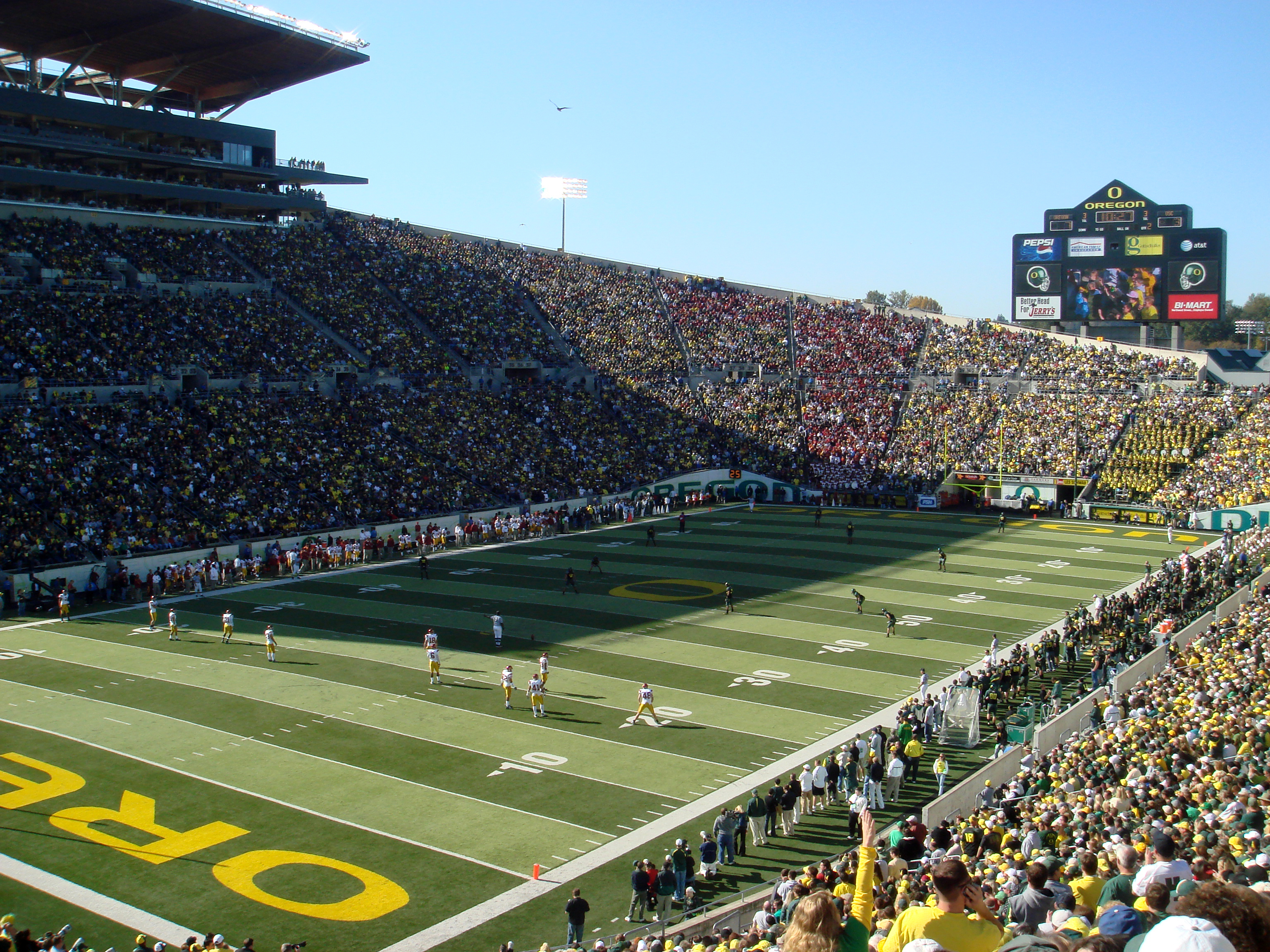 |
| Oregon Ducks Stadium / Bobak Ha'Eri |
"You have to consistently stand out on film," Oregon Ducks football player Ryan DePalo explained in a 2013 AddictedToQuack.com article. “They [the coaches] have nothing invested in you, whereas they have $100,000 invested in the scholarship player. If you don't consistently stand out, you will be forgotten.”
The differences between walk-on and scholarship players are undeniable. Walk-ons have fewer rights and fewer opportunity, especially in Division I. Walk-ons have to pay their way through college, only to be overlooked. With scholarship players rallying to unionize, walk-ons are once again being left out to dry.
Written by Asimina Hamakiotes and Gregory Sakas


